
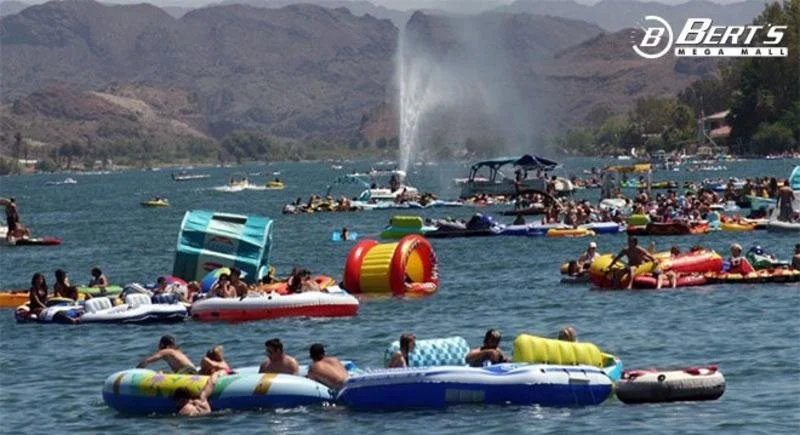
The Parker, Arizona tube float — one of the region’s most popular summer events — will proceed this year under new watercraft restrictions. Beginning April 1, 2026, the Bureau of Land Management (BLM) announced it will no longer permit pontoon boats on the Colorado River when the event is active. The change affects a staple of the float experience, when hundreds to thousands of participants and support craft share the river.
What changed
Previously: Pontoon boats were allowed on the river during the official Parker tube float event alongside inner tubes, rafts, kayaks, and smaller motorized craft.
New rule (effective April 1, 2026): BLM will prohibit pontoon boats from being on the water while the event is active. Other types of personal watercraft and non-pontoon vessels remain subject to standard safety and permit rules but are not barred by this specific change.
Why the BLM changed policy BLM cited safety and resource-protection concerns in its announcement. Officials pointed to:
Congestion and navigation hazards created when large pontoon boats operate amid dense floats of tubers.
Increased potential for injuries or collisions in crowded stretches of the river.
Resource and shoreline impacts tied to anchoring, social congregation, and onshore activity associated with larger boats.
BLM said the restriction aims to reduce risks to participants and better manage river access during peak event days.
What this means for attendees
Tubers and small non-pontoon craft: Inner tubes, rafts, kayaks, paddleboards and similar vessels should still be allowed, though operators must follow any posted BLM and local safety rules, including life jacket requirements and river etiquette.
Pontoon owners: Those who typically launch pontoon boats for the tube float will need to make alternate plans. BLM did not indicate an exemption for pontoon boats that stage just outside the active event zone, though local launch points and parking may still see heavy use.
Event organizers and vendors: Organizers will need to update safety plans, signage, and participant communications. Vendors that rely on pontoon-based services will need to adapt or relocate operations.
Local reactions Reactions among residents, regular attendees, and local businesses are mixed. Some praise the move as a necessary safety measure that could reduce accidents and decrease overcrowding. Others express concern about the economic impact on businesses and boat owners who depend on pontoon-based rentals or services during the event.
Implementation and enforcement BLM will coordinate with local law enforcement and river management partners to enforce the new restriction during the active event period. Specific enforcement measures and boundary definitions for the “active” event zone were not detailed in the initial announcement; attendees are advised to monitor BLM releases and local Parker event communications for maps and operational guidance.
What to watch for next
Clarifications from BLM on geographic limits, enforcement details, and whether pontoon boats may stage nearby but remain outside the active zone.
Local government or organizer responses, including possible permitting or alternate access strategies.
Any appeals or requests for exemptions from businesses or community groups affected by the ban.
If you plan to attend the Parker tube float this year, check BLM updates and local event notices for the latest rules, safety guidance, and designated launch areas before arriving.